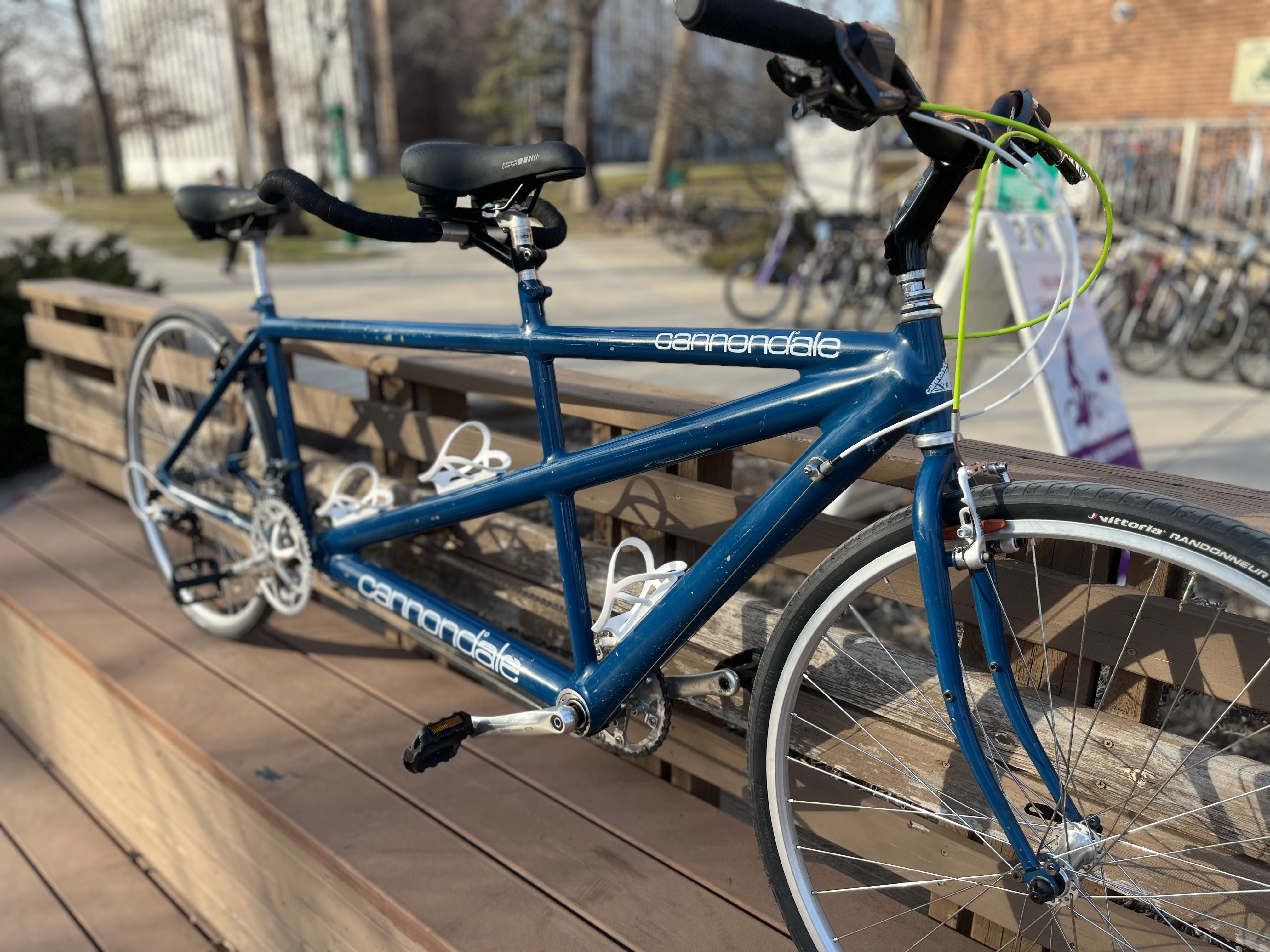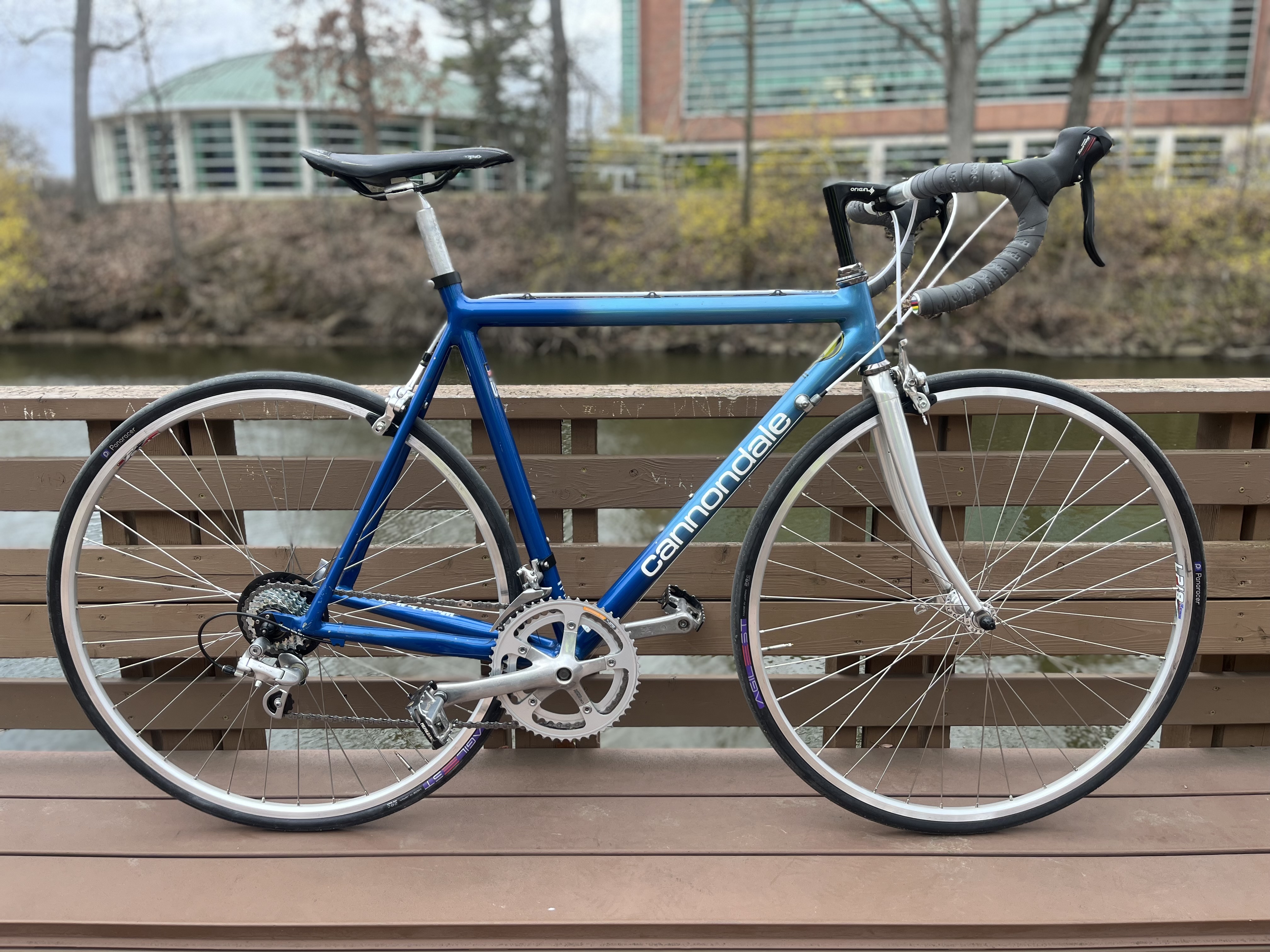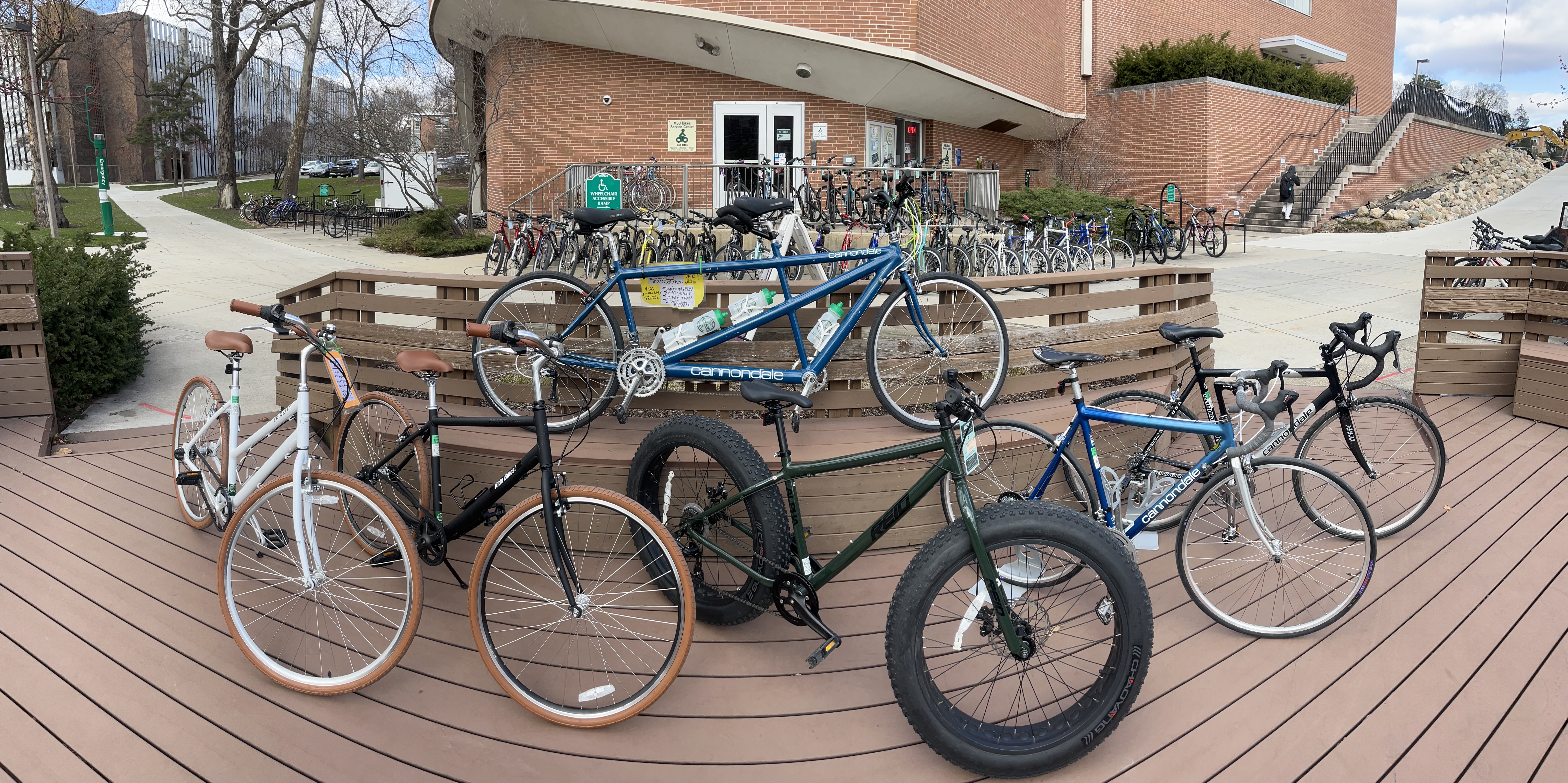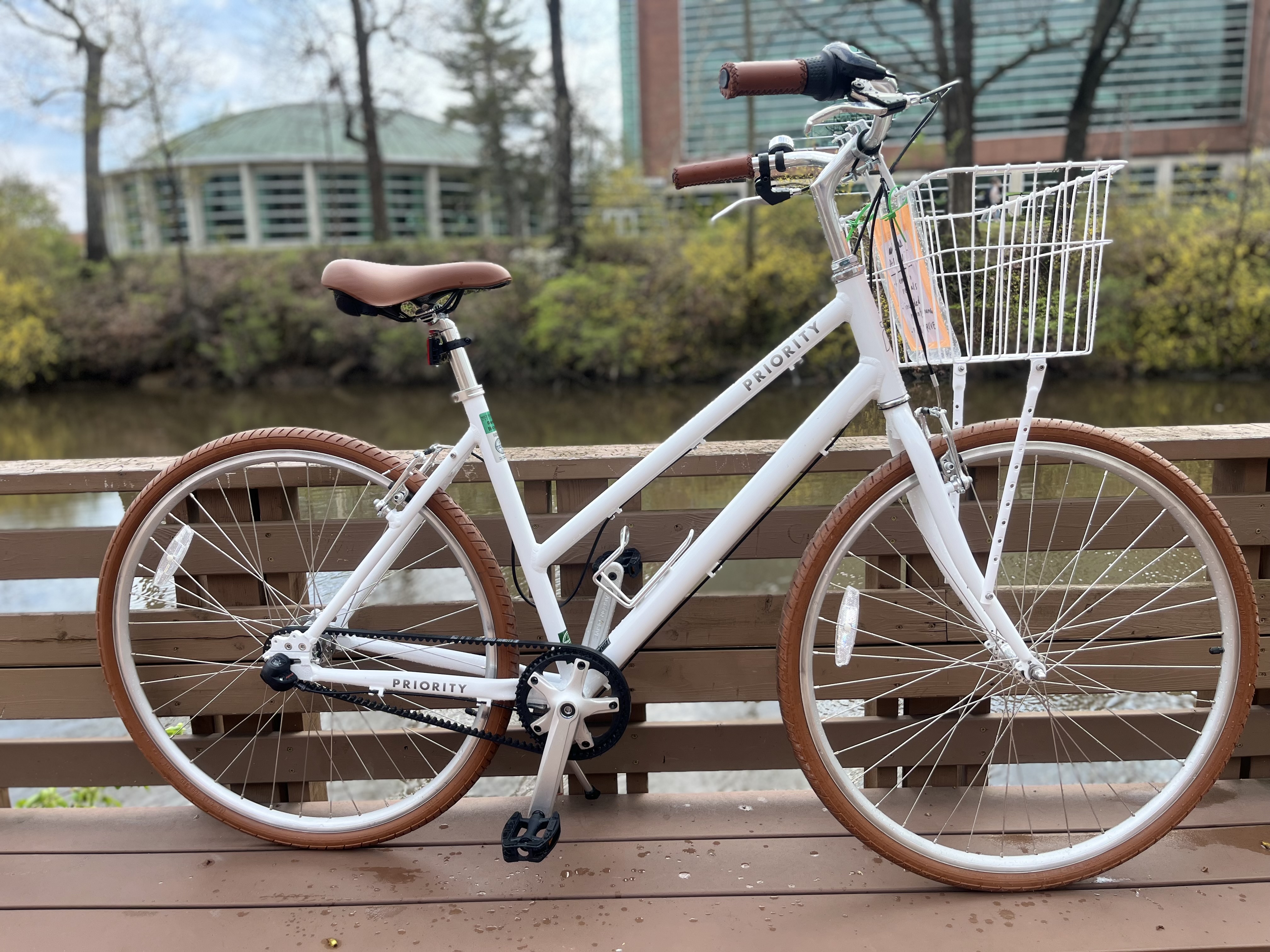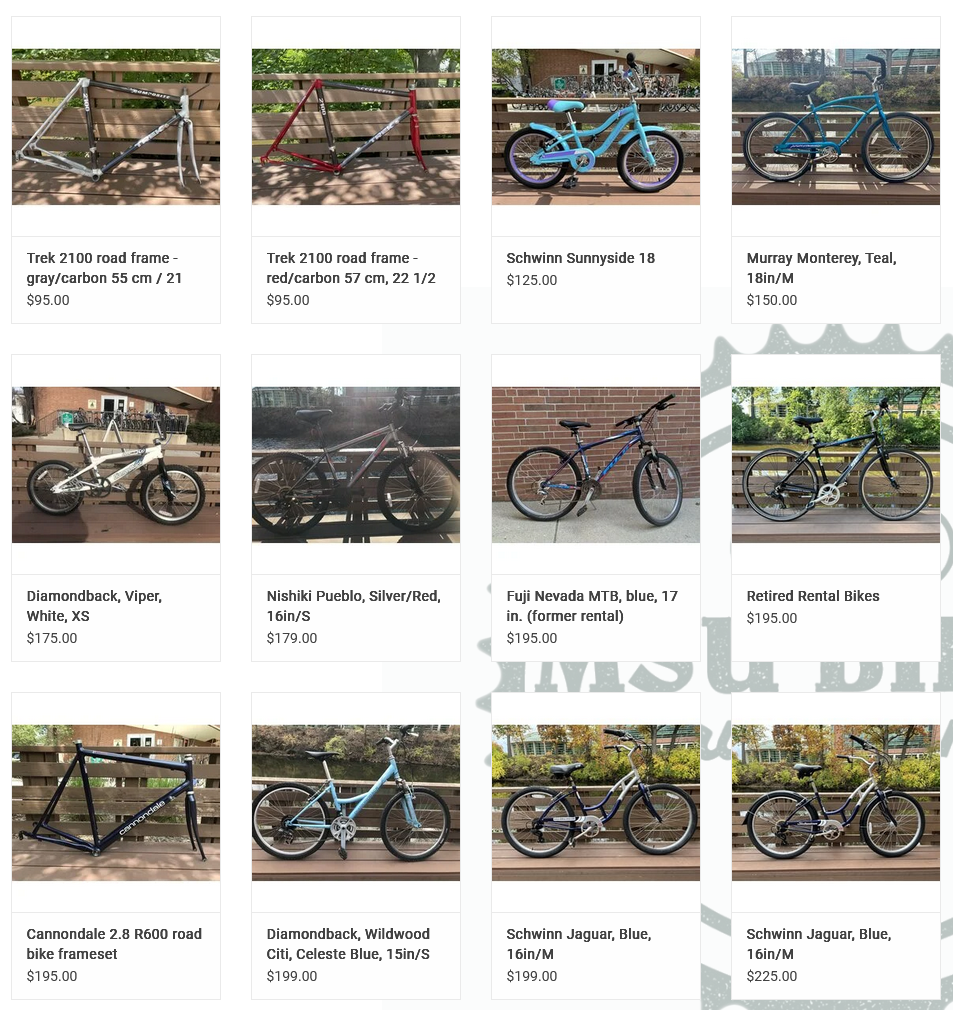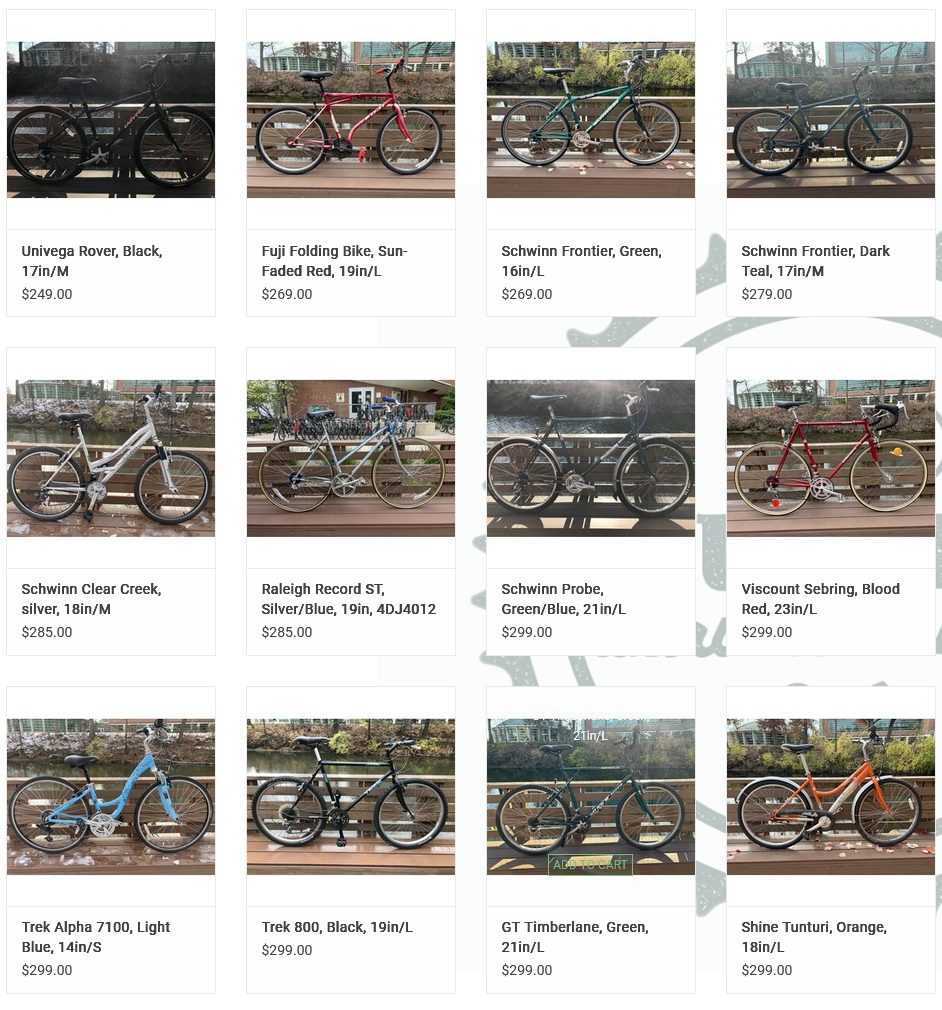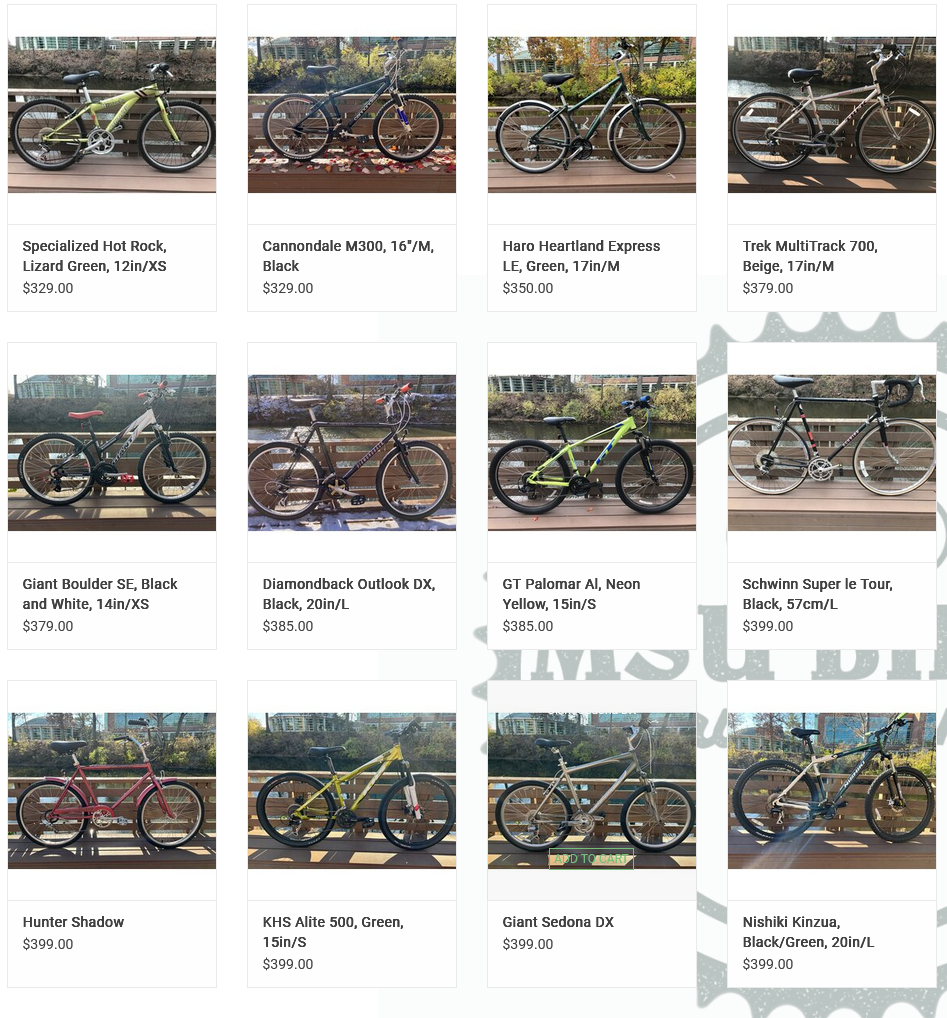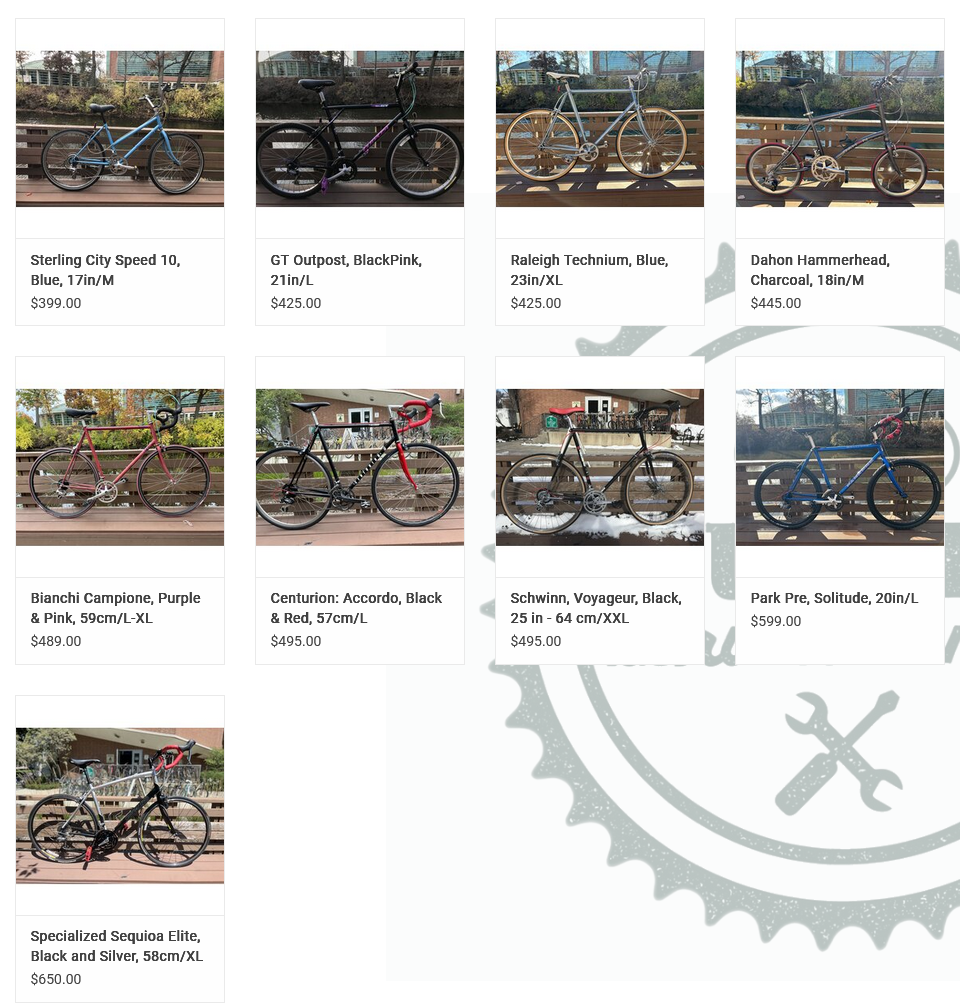
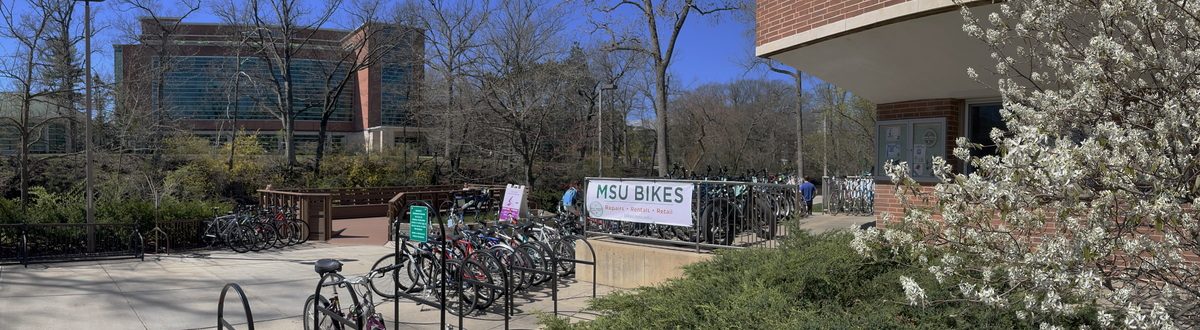
Lovely used bikes available at MSU Bikes

Tommasini Comp Road Racing Bike

Detail of the 1995 0-miles Tommasini Comp Road Racing Bike

We’ve been busy reconditioning some lightweight classics this winter.  Frame sizes are measured center of bottom-bracket to top of seat tube.

Take a look at the stock list:

Oh, and we’ve reduced the price on the 1995 Tommasini 0-miles road bike to $1550.00 (this bike is totally original, unmodified).  If you’re not familiar with this most remarkable bike that really needs to find a new home, here are the details:  Italian road racing bike. 56 cm/ 22″ frame. All Dura-Ace components. Ex-Dennis Nyquist bike (retired Wolverine Sports Club racer from the 50′s thru the 70′s) and MSU professor emeritus. 2 x 8 spd (16 speed)  Condition: 0 (zero) miles on it, as new condition. It’s been prepped and tuned by our expert mechanics.  Shipping: Local pickup is offered at no extra charge.
More photos: http://s794.photobucket.com/albums/yy225/msubikes/Tommasini-95/  

Louison Bobet Classic French touring bike

Louison Bobet Classic French touring bike

- Louison Bobet Vintage French Touring Bike – $395.00
Late 60′s to early 70’s bike named after a legendary professional bike racer (more info. here). Very large 26″ or 65 cm frame (measured center to top), classic bronze color with white lugs, hammered fenders. Non-stock features: customized shift lever, rear rack, rear derailleur. Bears frame decal from Cyclo-Pedia, a Detroit, MI based importer of fine European bicycles and components owned by Gene Portuesi who also started a mail-order business of the same name which became nationally renowned.  Mostly original, Not tuned; restoration candidate. Not ride-able as is. Completely tuned and very clean.
Photos: http://s794.photobucket.com/albums/yy225/msubikes/louison%20Bobet/

- 1970′s Purple Fuji  S10-S – $350.00
Purple, 21″, men’s frame; updated with upright/ hybrid stem/ bar combination for more comfortable city riding. Original road bar/ stem (with new black tape, cables/housing and brake lever hoods) and leather saddle can be included for $35 extra. Completely tuned and very clean. Includes: new tires & tubes, pedals, seat, cables & housing, brake pads, brake levers.  
Photos: http://s794.photobucket.com/albums/yy225/msubikes/Fuji%20S10S%20late%2070s/

Nishiki Cresta GT touring 1985

Nishiki Cresta GT touring 1985

- Nishiki Cresta GT touring bike, $345.00
Gorgeous Japanese touring bike from 1985 equipped with everything a discerning tourist would need. 58cm/ 23 in. men’s frame, Tange 2 butted tubing, freshly tuned up, hubs overhauled (sealed bearings), New parts: cables/ housing, tubes/ tires. Everything original and in great shape.
Photos: http://s794.photobucket.com/albums/yy225/msubikes/Nishiki%20Cresta%20GT%20touring%201985/

Raleigh Super Record  – $195.00
Nice original Raleigh Super Record road bike from the late 70′s, made in Japan. 23 in/ 58cm men’s frame, two-tone blue, many new parts: chain, brake pads, cables/ housing, bar tape. Freshly tuned and ready to ride!
Photos: http://s794.photobucket.com/albums/yy225/msubikes/Raleigh%20Super%20Record%20blue/

Schwinn World Voyager

70's Schwinn World Voyager - chrome Japanese lugwork

Schwinn World Voyager, $225.00
Lovely 70′s vintage Schwinn, 21 in/ 53 cm mens frame, made in Japan, chrome lugwork, updated vintage components, many new parts: new chain & freewheel, brake pads, cables/ housing, front and rear hubs overhauled.  Freshly tuned and ready to ride!
Photos: http://s794.photobucket.com/albums/yy225/msubikes/Schwinn%20World%20Voyager/

BCA Azzuri road bike $165.00
Nice late 70’s road bike, 21 in/ 53 cm men’s frame, blue, made in the USA with Tange 5 tubing, many new parts: tires, tubes, cables/ housing, brake pads, seat, grips.  Converted to upright handle-bar, hybrid-style bike.
Photos:  http://s794.photobucket.com/albums/yy225/msubikes/BCA%20Azzuri%20road%20bike/

Junior Raleigh Team Record

Junior Raleigh Team Record

- Junior Raleigh Team Record – $145.00
Cute little 24″ road bike for juniors from the early 70s; made in England, great condition. Freshly tuned and ready to ride! New parts: bar tape, 1 tube & tire, brake cable, hubs overhauled.
Photos: http://s794.photobucket.com/albums/yy225/msubikes/Junior%20Raleigh%20Team%20Record/

-  Junior Schwinn Varsity road bike, $135.00
Late 70′s 24″ road bike, yellow, 43cm/ 17 in. frame, many new parts: tires, tubes, cables/ housing, chain. Freshly tuned and ready to ride!
Photos: http://s794.photobucket.com/albums/yy225/msubikes/Schwinn%20Junior%20Varsity%20road%20bike/

Winter Cycling Tips

Campus cyclist Thomas Baumann in full winter mode.

Campus cyclist Thomas Baumann in full winter mode. Notice his bright clothing, lots of reflectivity, helmet and good eye protection. Click for more pics.

Cycling in the winter can be full of challenges. Wet and slippery conditions, poor lighting, distracted drivers, and cold temperatures can all make your ride more difficult. You don’t need to put your bike away until spring, however. Read on for tips on how to make winter riding more enjoyable and safer.

Stay Upright, Be Seen and Live

Winter is a hazardous time to be on the roads.  Falling snow, ice on windshields, fogged up windshields, blinding glare,  low lighting etc. will also dramatically affect the ability of motorists to see you.  Drivers may also be distracted by poor road conditions, phones, etc.  Assuming that drivers don’t see you is a good attitude any time of the year no matter whether you ride in the road (with or without bike lanes) or on the sidewalks/ paths.  

So you need to be sure you’re highly visible.  Although lights and bright clothing are recommended year round, they are especially critical during winter months. Use a flashing white light on your handlebar and a flashing red light on your back or seat-post to draw attention to yourself.  Here is a series of articles comparing the brightness and run-time of different headlights and tailights (many of which we stock here; most we can order), and another new article re: updating older taillights with modern LED bulbs (in case you have an older bike using incandescent bulbs).

Remember to also ride responsibly and intelligently.  Bicyclists get full legal protection as a vehicle of the road when they’re riding on the road and behaving according to the laws/ rules of the road (e.g., riding your bike through a pedestrian crosswalk is NOT protected).  Assuming that drivers don’t see you is a good attitude any time of the year no matter whether you ride in the road (with or without bike lanes) or on the sidewalks/ paths.  Falling snow, ice on windshields, fogged up windshields, etc. will also dramatically affect the ability of motorists to see you. 

Studded tires can be very helpful for keeping you upright on icy roads. They can be expensive however, so handy folks may want to consider making their own. MSU Bikes’ Tim Potter crafted a pair for his own winter commuter:

Notes on DIY studded tires: I was under the mistaken assumption that as long as I ride in a straight line and make no quick turns that I’ll be OK on ice. Well, recently I crashed on some black ice while going straight ahead. That changed my mind on studded tires immediately. I priced commercially available studded tires and found they were expensive. So, I made some myself in about one-and-a-half hours, and they work great. DIY instructions that I used can be found here. I also have top-secret tweaks to those instructions below.

Tune and Store Winter 2011 Offer

Not planning to ride your bike this winter? Don’t let it rust away outside in the snow! Bring your bike into MSU Bikes and get a basic tune-up and winter storage (a $105 value) for only $85.00! Your bike will be tuned-up by a trained mechanic and spend the winter inside in secure, heated storage, protected from the weather and theft. Click the image or here for the Tune and Store Winter coupon (exp. date has been extended).

Tweaks:I screwed #6 x 3/8” sheet metal screws (a box of 100 costs $5 from a good hardware store) from the outside in, just like in the instructions, and then used an old tire carcass (after cutting off the beads — use a smooth tread tire) to line the inside of the tire to cover up the protruding tips to protect the tube. While this modification makes the wheels quite a bit heavier, it provides another great benefit: the tires are now effectively “run-flats.” Since there’s so much rubber inside the tire, you can keep riding if you get a flat. If you can find #4 x 1/4” screws, you probably won’t need a liner. Remember: In the winter, you’re not trying to break speed records as much as stay alive.- Tim Potter, manager of MSU Bikes


'Borealis' lobster gloves from Planet Bike


Stay Comfortable

It’s cold out there. Winter air stings eyes and turns fingers into meat popsicles. Sloppy road slush tends to end up all over pantlegs and backsides.

Don’t arrive at your destination soaking wet and half frozen. Fenders come in full coverage models and easy to attach clip-on models. Some rear fenders are designed with quick-release attachments that don’t require tools for installation. For your hands, try a pair of “lobster” gloves or mittens.  The three or four fingered design helps retain body heat and keep your digits warm. Many cyclists also find ski or chem-lab goggles helpful in keeping the cold air out of their eyes.

Keep Your Equipment in Working Order

Rusted and frozen parts are one of the most common issues we see in the shop during the winter. Moisture inside cable housing can cause freezing and corrosion, which results in poor brake and shift performance. Water in locks can cause them to freeze shut resulting in locks that can’t be opened or keys snapping off.

A properly locked U-lock

A properly locked U-lock; click the pic to get more locking tips.

Pick up a bottle of wet lubricant that’s designed for bicycles. (WD-40 is not a lubricant. Try TriFlow or better yet, Pedro’s Synlube which stays on longer in wet, cold conditions). Chains need to be lubed frequently during wet months. You can also drip the lube down inside cable housing to restore functionality to frozen brake and shift systems.

When locking your bike, point the keyhole of your lock toward the ground to prevent to prevent rust and ice forming inside.  A squirt of chain lube into the lock cylinder will help prevent freezing and result in smoother operation.  If you find your lock frozen use some hot water, coffee or tea and pour it slowly over the lock mechanism to thaw it enough to open it up, then be sure and dry it out with a hair dryer and then lube it to prevent it from freezing or rusting in the future.

Covered/ Indoor Bike Parking/ Storage Options

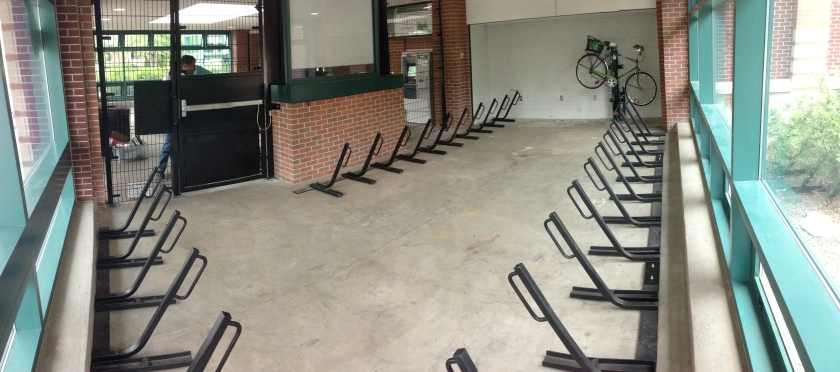
Indoor heated bike parking facility at the Comm. Arts Parking Ramp

Indoor heated bike parking facility at the Comm. Arts Parking Ramp; click the pic for more pics.

Looking for a place to lock up your bike out of the rain and snow? We’re getting more covered bike parking options around campus most of them inside our car parking garages. Click here to see them all.

Additionally, many of the residence halls on campus have indoor bike rooms: Holden, Wonders, Wilson, Holmes, McDonel, Akers, Hubbard, Mason/Abbot, Snyder/Phillips, Campbell, Landon, Yakeley/Gilchrist all have bike rooms (as of Nov. 2010). Inquire at your hall reception desk about using the bike rooms.  Note that the rooms use a common key so be sure and lock your bike even in these rooms.


 Further Resources

More winter cycling tips and links to other sites can be found on our official web site. Also check out the notes from our winter cycling class in 2010.   If you’d like to receive an email when we announce our classes this winter consider subscribing to our MSU Bikes e-newsletter here.

What winter riding tips do you have to share?

(Updated and reposted by Tim Potter, 1/18/12)

New Tune-up and Storage Deal

Not planning to ride your bike this winter? Don’t let it rust away outside in the snow!

Tune and Store Winter 2011 coupon - print and bring in with you

Tune and Store Winter 2011 coupon - print and bring in with you

Click here for the Tune and Store Winter 2011 coupon

Bring your bike into MSU Bikes before 12/16/11 and receive a basic tune-up and winter storage (a $105 value) for only $85.00!  Your bike will be tuned-up by a trained mechanic and spend the winter inside in secure, heated storage, protected from the weather and theft.

If you’re riding for all or part of the winter be sure and check out our Winter Cycling Tips to make your riding easier and safer.

Celebrating our 5th Anniversary!

MSU Bikes team celebrating our 5th anniversary

MSU Bikes team celebrating our 5th anniversary

Please join us in celebrating our 5th Anniversary this fall! And what a fall it’s been to mark our 5th year. How busy has it been you wonder? Check out these stats for the 1st 10 days of the semester:
- 300 tubes installed
- 254 tires installed
- 65 brakes adjusted
- 38 wheels replaced
- 35 chains replaced
- 34 crank arms replaced
- 25 pr. of pedals replaced
- Countless others helped with tightening handlebars, stems, seats, etc. for free by our front-room staff.
- Many others taught how to change their own flats (when we were too busy to handle more repairs)
- Sadly, hundreds of others turned away due to our shop being too full of bikes to repair for others; on the plus side, those customers were referred to the other bike shops in the area.

Bike locking do’s and don’ts

Example of how NOT to lockup

Example of how NOT to lockup

I was out on campus the other day and saw a pretty nice bike locked up in a particularly bad way which prompted me to take some more pics of other bikes in the same area to show how to both NOT lock up and how to best lock up your bike.  I also included some pics of some helpful anti-theft devices that we sell in our Center to help you avoid becoming a victim out there.

Check out the pics here.  Also, check out the other info. on preventing theft on our website here.

  • More anti-theft tips:
    Ever forget your lock and need to lockup for a quick visit to a store or cafe?  Here’s a few quick tips: 
  • Take your front wheel inside with you.
  • Release the quick-release on your rear wheel; as soon as the would-be thief tries to ride off the rear wheel will shift in the frame and lockup (only works on bikes without vertical drop-outs).
  • Use your helmet and strap it thru your rear wheel and frame.
  • This one is more complex, only works with certain brakes and requires some forethought: adjust one of your brakes with the release in the open position then close it when necessary to lock your brake.
  • Check out the late Sheldon Brown’s page of clever anti-theft tips.
     

New life for an older bike

In its original condition and configuration

In its original condition and configuration

Take a look at our most recent restoration of an older (mid-80s) Fuji Espree that we (kudos to our mechanic Jordan for his work on this one) did for a customer.  They wanted to ride it again, in comfort of course.  So, the before and after pics here will show you how an older drop-handlebar style bike can be reconfigured into what is commonly called a “hybrid” or a city bike:

After it's refurbishing - reconfiguring as a city bike.

After it's refurbishing - reconfiguring as a city bike.

The only thing I’d do to make it a perfect city/ commuter bike would be to add fenders, kickstand, lights and a rack.  Anyways, if you’ve got one of these older road bikes hanging in your basement or garage imagine riding it again and relive the old days instead of just assuming you need a new bike (which we’d be happy to sell you as well!).

Pre-Order a Bike for Fall Semester

Need a new bike for the upcoming school year? Avoid the rush this fall and order one now. Visit https://www.advancedsports.com/brands.html to view all the different models available, and then stop by MSU Bikes or call us at 517-432-3400 to place your order. We’ll have your bike ready to pick up when you get here in the fall!

MSU Bike’s Commuter Challenge 2011 results

Thanks for your generous patience; the results are in!  

Commuter near MSU campus heading home.The first MSU Bike’s Commuter Challenge, held during National Bike to Work Week (May 16 – 20th, 2011) saw 24 participants (plus 2 who were interested in trying it but were unable to participate).  We collected some interesting statistics and compelling commentary about their commute routes/ experiences (Here’s a link to a PDF file with that commentary and some other data from the Challenge that you might enjoy reading).

Approx. ¾ of them were experienced commuters with the remaining being beginners.  The average mileage for the week was 36 miles and for the year to date 320 miles.

The winning individual commuter in the Experienced category was Laura Carter, who works at the Main Library, who logged 90 miles for the week.  There’s a tie for 2nd place between Mike Weigand (Plant Pathology & MSU Bikes) and Layne Cameron (University Relations) with 70 mi. each.  3rd place goes to me, your illustrious organizer with 55 miles.

In the Beginner category Leslie Galvez wins with 60 miles, then Jane Meland (Libraries) with 27 miles followed by Hollyce Balentine in 3rd place with 21 miles.

The winning campus department was the Library with 4 participants, 2nd place goes to MSU Bikes (yay) with 3 participants and a 2-way tie for 2nd place with the Cyclotron, Fisheries and Wildlife (CANR) with 2 each. 

So, now you’re wondering when do we have the awards ceremony? 

That will be on June 29th, Wed., at noon here at MSU Bikes on our deck or inside the shop if it’s raining.  We’ll give out some cool awards for the folks named above (except myself) and some certificates for the departments.  Hope to see you here!

To those of you who did, thanks for participating!  We’ll plan on doing it again next May during National Bike to Work Week, but in the meantime keep commuting by bike to save $$, for your health and for the fun of it!

Tim Potter & Crew @ MSU Bikes

PS:  If you’re not subscribed to the MSU Bikes eNewsletter (a Yahoo group), please hit that link and consider subscribing to stay informed of bike events and other bike-related info. on campus and in the community.  Also, follow us on Facebook, Twitter and our newer blog here.

Our ‘First Fridays’ Deal

Lansing's First Tweed Ride, May 1, 2010

You can come out & ride in tweed if you'd like our First Tweed Ride in Lansing, May 1, 2010.

We just launched our ‘First Fridays’ deal in conjunction with a ‘Ride Around Town’ this evening (which, by the way, we’ll continue the RATs every Friday all summer long, same time, same starting point).  Read on:

Come on out for a ride around town with area bicyclists this evening and join us as we check out some of the many deals around town as part of Lansing’s new “First Fridays” deals.  Here’s MSU Bikes’ deal as follows:

“Stop by MSU Bikes for a free bike safety check-over.  We’ll check the more critical areas of your bike, provide some simple adjustments/ tweaks if necessary & give you a free estimate for what needs more extensive repair to help you know that it’s in good shape for summer riding.”

Come to MSU’s Beaumont Tower at 5:30 pm; we’ll roll at 5:45 pm with one of the establishments on the “First Friday” list as our first destination.  If there are others in the downtown area or west of Lansing who’d rather not come all the way over to MSU to start pls. suggest a meet-up place downtown or maybe Old Town and we’ll meet-up there first to get everyone together.

Hope to see you out there,

Tim

Use Caution When Buying a Used Bike

Used bikes can look to be in good shape, but hide expensive problems.

Buying a used bike seems like a great, affordable option to many people. However, this is often not the case. I’ve seen many people purchase a used bike for $5 and be very disappointed when they learned that the cost to make the bike safe and rideable was over $100.

If you are considering buying a used bike that needs work, you should be informed on what to look for. Recognize what repairs will be needed and what brands to avoid. Many used bikes are simply not worth fixing up.

Recognizing Problems

All bikes will eventually require maintenance. Most used bikes will need the following repairs:

Chain: Replacing the chain is unavoidable for any bike that has enough miles on it. If during a test ride the chain seems to slip or lurch forward while pedaling, the chain and freewheel need to be replaced.

Brake and Shift Adjustments: These systems fall out of adjustment with use and require occasional tuning. Rusted or corroded cables and worn brake pads are another common problem. The cable should slide smoothly and the brake arms and derailleurs should move freely. Cable replacements require a readjustment of the system.

Wheel truing: Wheels with uneven spoke tension require a ‘true’. Untrue wheels will spin asymmetrically and can interfere with braking.

Bearing adjustments: On many bikes it is common for the bearings of the headset, the hubs, and the bottom bracket to become loose. If you can rock the wheels or crankarms side to side, or the headset inside the frame, the bearings are loose and need adjustment. Very loose bearings on cheap wheels often don’t hold adjustments, and require a wheel replacement.

Some used bikes will have additional problems you should be on the lookout for.

Missing or Bent Wheels: Severely bent wheels cannot be repaired and require replacement. If the wheel is damaged, the tire, tube, and freewheel can be moved to a new wheel.  If the wheel is missing completely, all those items will have to be purchased in addition to the wheel.

Missing or Loose Crankarms: Crankarms must be tightened onto the bottom bracket with the appropriate torque. If they are installed too loosely, they can begin to rock, spin, or fall off. This movement often damages the crankarm and a new one must be installed.

Bent Forks and Frames: While bent frames and forks can be difficult to spot, you should be aware of the possibility of this damage on used bikes. Depending on the severity, a bent frame or fork can make the bike unsafe to ride.

Choosing A Bike

The above repairs are very common and ones I see on almost all recently purchased used bikes. If you are considering buying a used bike, budget between $100 and $130 for necessary repairs and maintenance to make your bike safe and rideable.

When it comes to department store bikes (Huffy, Pacific, Magna), it’s often cheaper to buy the same model new than it is to repair a used one. This isn’t necessarily a better option however, because cheap department store bikes will eventually require these repairs anyway. (Sometimes immediately, as these bikes are not assembled by trained mechanics and often require tune-ups when brand new.) Even after a full tune up, a department store bike is still made of cheap materials that break and come out of adjustment easily. My advice is to avoid purchasing department store bikes, new or used.

Bike shop brand bikes (Fuji, Trek, Specialized, Giant, ect.) can be worth fixing up, depending on the amount of repairs needed. Remember to look the bike over thoroughly and estimate what all will need to be done. These brands hold adjustments longer and do not break as easily.

It can be overwhelming to diagnose what repairs a bike needs. A simpler option is to purchase an already tuned used bike. While this may seem more expensive up front, all the additional repairs have been done for you. You can ride assured that the bike is safe and should last many years.

Follow

Get every new post delivered to your Inbox.

Join 159 other followers